
Hanwei Global Security Intelligence
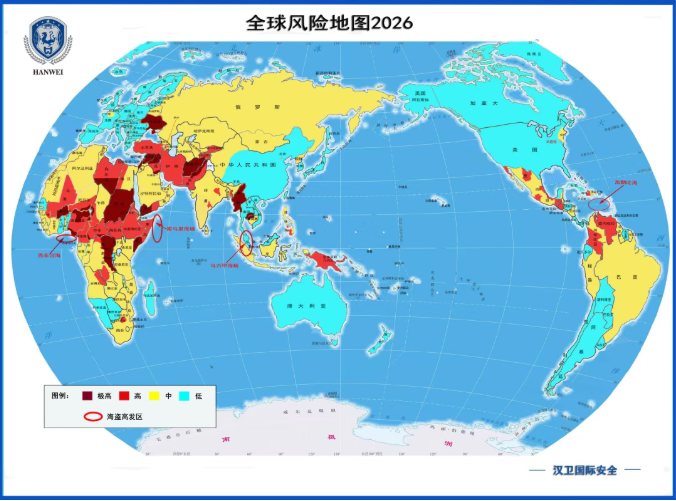
Middle East
1. Syria
A bomb attack in Damascus left 9 dead and 20 injured. On July 2, an explosion struck a café near the Palace of Justice in central Damascus, the capital of Syria, killing at least nine people and wounding twenty. The Ministry of Justice of Syria’s transitional government issued a statement the same day, confirming the blast was triggered by an improvised explosive device and branding it a "terrorist bombing" that claimed the lives of multiple lawyers. No group has yet claimed responsibility for the attack, and relevant investigations are underway.
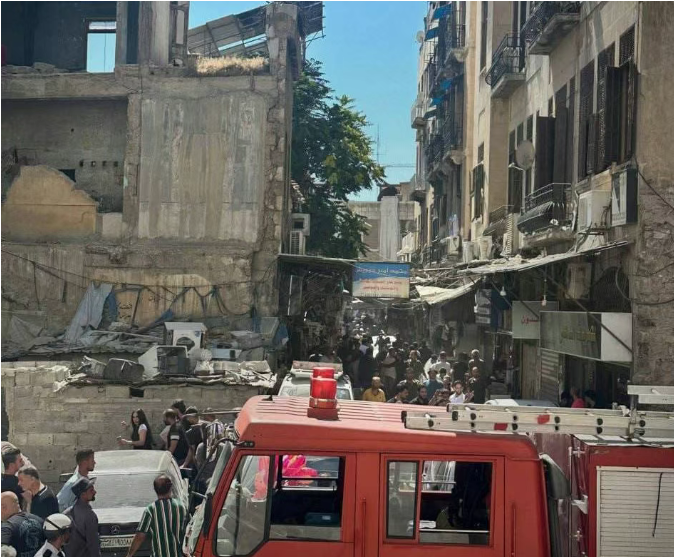
– Blast Scene
2. Iraq
Iraqi forces shot down a drone over Baghdad. On July 1, Iraqi security forces intercepted and shot down a small unmanned aerial vehicle (UAV) flying over the Green Zone in Baghdad. Debris from the drone fell on Palestine Street in eastern Baghdad, damaging two vehicles; no casualties were reported.
3. Iran
An armed assault in Sistan-Baluchestan Province killed one police officer. On July 1, an armed attack took place in southeastern Iran’s Sistan-Baluchestan Province, claiming the life of one police officer. No further details of the incident have been released.
4. Palestine & Israel
An Israeli military raid in the West Bank killed one person. On June 30, Israel Defense Forces (IDF) launched large-scale raids across multiple towns in the Palestinian West Bank, resulting in one fatality. Statistics released by the Palestinian Ministry of Health on July 2 showed that since the latest round of Israel-Palestine hostilities broke out, IDF strikes have killed at least 1,085 Palestinians in the West Bank.
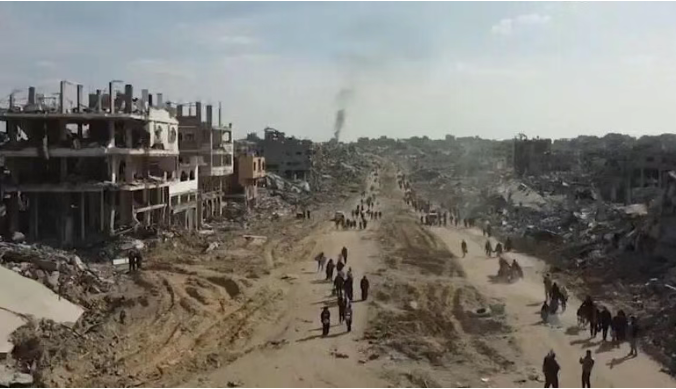
Scene of IDF Raids in the West Bank
5. Lebanon
Israeli strikes caused heavy casualties. From June 29 to July 5, Israel carried out continuous attacks across multiple locations in Lebanon with numerous casualties reported. On June 29, Israeli airstrikes targeted southern Lebanese areas including Nabatiyeh, leaving multiple people dead and injured. On July 2, the IDF struck ten Hezbollah infrastructure sites across southern Lebanon; casualty figures remain unconfirmed. In the early hours of July 3, a truck was hit by an Israeli drone near Israel’s self-proclaimed "security zone", wounding two civilians. Data issued by Lebanon’s Ministry of Health on July 3 stated that Israeli military operations against Lebanon since March 2 this year have killed 4,297 Lebanese people and injured 12,196.
6. Yemen
Asia-Pacific
1. Afghanistan
Afghanistan stated Pakistani airstrikes killed 36 civilians. On June 29, Fitrat, Deputy Spokesperson of the Afghan government, said Pakistan launched airstrikes late on the 28th targeting three Afghan provinces: Paktia, Paktika and Kunar. The strikes killed at least 36 civilians, injured 163 others, and completely destroyed three residential buildings in Paktika Province. In response, Attaullah Tarar, Pakistan’s Minister of Information and Broadcasting, said Pakistani security forces conducted cross-border military operations along the Afghanistan-Pakistan border overnight from June 28 to 29, killing 29 militants in retaliation for a string of recent terrorist attacks within Pakistan.
2. Pakistan
A bus plunged into a valley, leaving 40 dead and 8 injured. On July 3, a passenger bus crashed into a valley in the Sherani district of Balochistan Province, killing at least 40 people and injuring eight. The bus was traveling from Quetta, the capital of Balochistan, to Peshawar, capital of Khyber Pakhtunkhwa, when it lost control on a sharp mountain bend and fell into the ravine.
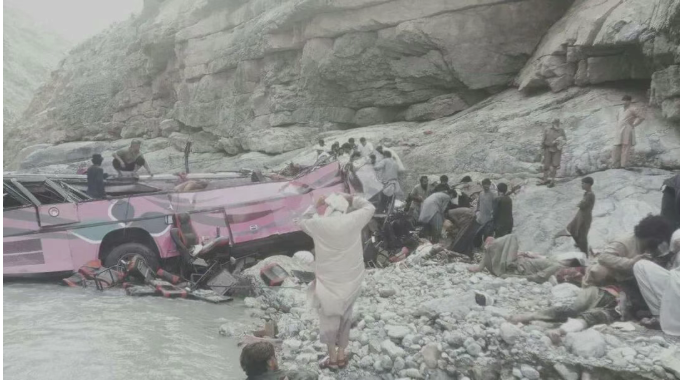
Crash Site
3. Thailand
Multiple bomb attacks left three people injured. On June 29, a roadside bomb exploded in Narathiwat Province in southern Thailand, wounding two Malaysian tourists. On the same day, three gas stations in Pattani and Yala Provinces were hit by successive bomb blasts, injuring one person and damaging partial facilities. Thai security authorities attributed the attacks to southern separatist militants, whose objectives are to undermine local public safety, shatter tourism confidence and cripple the regional economy.
4. Indonesia
Africa
1. Nigeria
Serial attacks killed 21 people and abducted 39. According to monitoring reports from Hanwei International’s West Africa security officers, an armed group raided a school in Borno State, northeastern Nigeria, on June 29. Three people were killed, while 36 students and three teachers were kidnapped as students sat for graduation exams. The abductees included 25 female and 11 male students aged between 15 and 18. No group has claimed responsibility for the abduction and attack. From June 29 to July 1, violent clashes sparked by land disputes in Niger State, central Nigeria, left at least 18 dead. A joint security task force composed of police and military troops has been deployed to the affected area to restore order.
2. South Africa
Late June 29: A foreign-owned store in Sekhukhune District, Limpopo Province, was looted of all goods and cash from cash registers. Three responding police vehicles were smashed, with windows shattered and emergency lights torn off; five suspects were arrested on the spot.
June 30: A foreign-owned supermarket in Claremont, Durban, KwaZulu-Natal Province, was ransacked, with 51 arrests made by provincial police. On the same day, rioters in Alexandra, northern Johannesburg, looted foreign-run community grocery stores, causing one fatality.
3. South Sudan
A humanitarian convoy ambush in Jonglei State killed 17 and wounded 9. On June 29, a humanitarian convoy operated by the John Dau Foundation was ambushed in Duk County, Jonglei State, South Sudan, leaving at least 17 dead and nine injured. The fatalities included foundation staff and accompanying personnel.
4. Mali
Military outposts came under armed assault. On July 4, Mali’s armed forces released a communique stating multiple military positions suffered armed attacks, which killed one soldier and wounded four. All assaults were repelled, the outposts remain under full military control, and twenty militants were killed.
5. Sudan
Blue Nile State: Sudan’s regular army recaptured two key towns, Silkim and Mujajja.
Darfur State: Abu Kumla became a flashpoint for heavy troop standoffs, with both sides fielding armored vehicles and artillery in protracted tug-of-war battles.
Central North Kordofan State: Al-Obeid remained the core contested city.
Prolonged armed combat has cut off urban water and electricity supplies, forced hospitals to close, and worsened the humanitarian crisis.
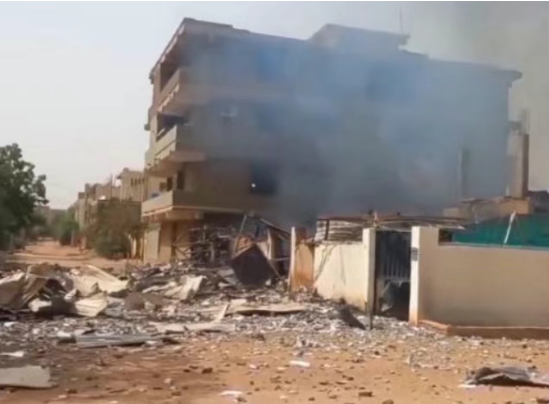
Combat Scene in Al-Obeid
6. Democratic Republic of the Congo (DRC)
A boat sinking in Kasai Province killed 20 and left over 100 missing. On July 1, an overloaded vessel carrying more than 200 passengers split its hull and sank at the confluence of the Kasai and Sankuru Rivers in central DRC’s Kasai Province. At least 20 people died, 80 were rescued, and more than a hundred remain unaccounted for. Preliminary investigations identified overloading as the primary cause; search and rescue operations are ongoing.
7. Niger
Europe & the Americas
1. United States
A prison hostage crisis unfolded in North Carolina. On June 29, inmates seized partial control of a prison in Bertie County, North Carolina, taking two correctional officers hostage. The facility housed 88 inmates and three staff at the time. Prisoners assaulted on-duty guards and seized sections of the facility, abducting two officers while a third escaped. The North Carolina State Bureau of Investigation quickly set up security cordons around the site, and the inmates have since been transferred to alternate detention facilities.
2. Ukraine
On the Ukrainian side, the General Staff of the Armed Forces of Ukraine reported over a thousand frontline battles this week. Ukrainian troops repelled Russian offensives across multiple axes in Zaporizhzhia, Donetsk and Kupiansk. Ukrainian forces targeted five Russian command posts, multiple drone storage depots and two troop assembly points. Ukrainian air defense units destroyed numerous missiles and thousands of enemy drones. Ukraine launched strikes on two Russian military airfields in Crimea, destroying seven hangars housing Su-30SM, Su-30 and Su-24 fighter jets at Saky Air Base. Ukrainian long-range strikes hit an oil terminal in Saint Petersburg and the Kronstadt military base, among other Russian military energy assets.In addition, from the night of July 1 to early July 2, ten districts of Kyiv were attacked by Russian cruise missiles, ballistic missiles and drones, killing 27 civilians and injuring 91. Kyiv Mayor Klitschko announced July 3 as a city-wide day of mourning via social media.
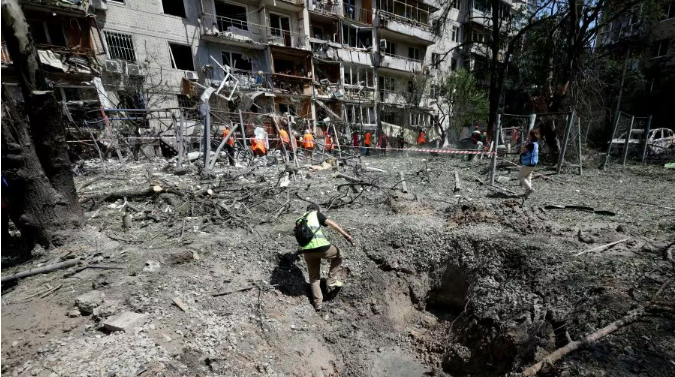
Missile Strike Damage in Residential Areas, Pechersk District, Kyiv, July 2
3. Russia
Ukrainian drone attacks killed four and wounded twenty-eight. On June 29, Donetsk came under Ukrainian drone strikes that killed three people and injured thirteen, damaging multiple residential buildings and civilian infrastructure. On July 4, more than 200 Ukrainian drones targeted Moscow and other Russian cities, most of which were intercepted by Russian air defense systems. Separate drone strikes hit an oil terminal in the Kirov District of Saint Petersburg, Leningrad Oblast, Belgorod Oblast and Bryansk city in Bryansk Oblast on July 4, killing one person and injuring fifteen in total.
4. Mexico
Four killed in crowd crush during celebrations. From the night of June 30 to early July 1, massive celebrations unfolded in Mexico City after Mexico’s national football team defeated Ecuador to qualify for the Round of 16 at the FIFA World Cup. A crowd crush during the festivities killed at least four people from suffocation. Approximately 1.4 million people took to the streets that night; fireworks ignited near midnight triggered mass panic and the fatal stampede.
5. Venezuela
Death toll from powerful earthquakes rises to 2,954. On July 4, updated official Venezuelan statistics showed two recent powerful earthquakes in the country killed 2,954 people and injured 16,592. The number of deceased Chinese citizens rose to nine. To date, 6,462 people have been rescued, and 16,309 are displaced without homes.
6. Ecuador
An explosion in Quito injured one security guard. On June 29, a blast near the headquarters of the Mining Supervision Authority in northern Quito, Ecuador’s capital, injured one security officer and damaged the agency’s office building and surrounding structures. Police stated suspects left two explosive parcels by vehicle in the early hours before detonation; the perpetrators remain at large.
7. Spain
Multiple assaults left four injured. On June 29, a shooting on Mar Street, La Mina district, Sant Adrià de Besòs, Barcelona Province, wounded one person. The same day, three masked armed robbers held up a jewelry store inside the Éboli Shopping Centre in Pinto, Community of Madrid, stealing large quantities of jewelry. On June 30, a mass brawl broke out in an industrial park in Barrax, Albacete Province, injuring three people.
8. Monaco
An explosion injured three people. On June 29, a suspected man-made explosive blast in Monaco wounded at least three civilians, two of them critically. A male suspect placed an explosive parcel inside a building lobby before fleeing the scene. Investigations are underway.
9. Germany
A shooting in northern Germany killed six people. On June 29, a shooting in Stade, northern Germany, left five dead at the scene and one victim who later succumbed to injuries in hospital. The suspect has been arrested. Police confirmed the incident occurred at a youth welfare facility, likely stemming from a custody dispute.
10. Sweden
The Russian Embassy in Sweden was targeted by drone attacks. On July 2, unmanned aerial vehicles attacked the Russian Embassy in Sweden with no reported casualties. In the early hours, one quadcopter dropped a container filled with red paint onto embassy grounds, while a second drone carrying a mock improvised explosive device crashed within the main embassy compound. Russian officials denounced the incidents as "more than mere provocation" and an attempt to intimidate diplomatic staff.
11. Brazil
Maritime Security
1. Strait of Hormuz
A container ship ran aground. On July 1, Iranian media reported a container vessel ran aground in the Strait of Hormuz after failing to follow Iran’s designated shipping lanes. The vessel opted for an alternate route and became stranded in shallow waters, unable to continue its voyage. The report withheld details including the vessel’s name, flag, exact location, crew casualties and cargo damage.
2. Yemen
Four armed individuals boarded a merchant vessel illegally via small boats, damaging the wheelhouse and cabins; the crew emerged unharmed.
A skiff approached an oil tanker approximately 85 nautical miles south of Balhaf before departing, with no harm to the tanker’s crew.
On July 5, a cargo ship was attacked by unidentified armed militants off Yemen’s coast.
3. Gulf of Aden
Translation Notes
Official institutional names, military designations and regional administrative divisions adopt standard English diplomatic and maritime terminology;
Militant groups, armed forces and government bodies use internationally recognized official English appellations;
File ID image labels are retained in original format as attachment markers without translation;
Marine industry jargon (UAV, skiff, bulk carrier, frigate, nautical mile, IMO-designated shipping lane) follows global maritime standard vocabulary;
Political neutrality is maintained for all regional conflicts and armed factions in line with international mainstream security briefing writing conventions.