
Hanwei Global Security Briefing
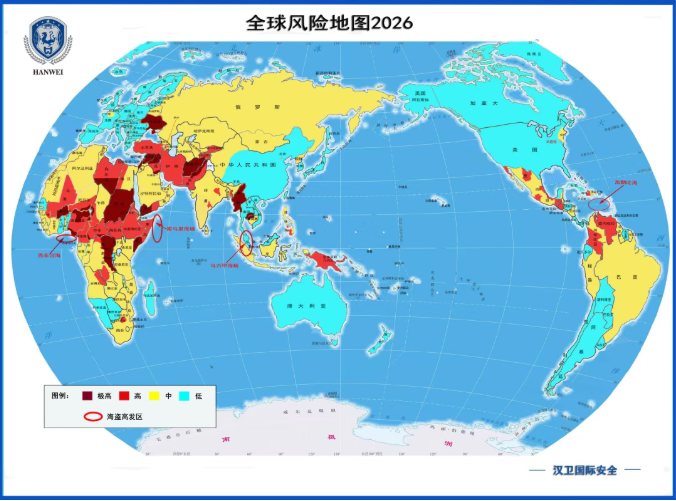
Per security risk assessments, regional security risk levels are shown on the Global Risk Map. Regions including Afghanistan, Syria, Myanmar, Pakistan, Nigeria, Sudan, Ukraine, Palestine and Venezuela are classified as Extremely High-Risk Zones. Frequent armed conflicts, terrorist attacks and other security incidents have occurred in these areas during this period. Chinese-funded enterprises stationed overseas shall strengthen their safety prevention and protection measures.
(This briefing is solely for internal corporate risk assessment use)
Middle East
(I) Syria
On 20 June, troops of Syria’s transitional government came under attack by unidentified armed militants in Manbij city, Aleppo Governorate in northern Syria, leaving two dead.
(II) Iraq
On 20 June, an unmanned aerial vehicle crashed near the residence of Mohammed Al-Halbousi, Speaker of the Council of Representatives of Iraq, located in Anbar Governorate, igniting reeds nearby. No casualties or property losses were reported. Security authorities are conducting technical analysis on drone wreckage to determine the cause of the incident, and no group has claimed responsibility to date.
(III) Iran
The US and Iran shall immediately and permanently cease all military operations on all fronts including Lebanon, and commit to refrain from launching wars or military actions against each other in the future. A final agreement will confirm the permanent end of hostilities across all fronts including Lebanon.
The two sides commit to negotiate and reach a final agreement within a maximum of 60 days.
The US will immediately commence lifting its maritime blockade against Iran upon the signing of the MoU, with full removal completed within 30 days. It also pledges to withdraw all troops stationed around Iran within 30 days after the final agreement takes effect.
The US commits to cooperating with regional partners to invest no less than USD 300 billion in Iran’s reconstruction and economic development, with implementation mechanisms finalized within 60 days as part of the final agreement.
The US will terminate all sanctions imposed on Iran, and unfreeze or lift restrictions on Iran’s frozen funds and assets after the MoU enters into force.
Upon signing the MoU, Iran shall guarantee the free and safe passage of merchant vessels between the Persian Gulf and the Sea of Oman within a 60-day timeframe, and launch mine clearance operations within 30 days.
Iran reaffirms it will not acquire or develop nuclear weapons. Both parties agree to conduct on-site dilution of Iran’s enriched uranium under the supervision of the International Atomic Energy Agency (IAEA).
On 20 June, delegations from the US and Iran, alongside Pakistan’s Prime Minister Shehbaz Sharif and Chief of Army Staff General Asim Munir, arrived in Bürgenstock, Switzerland to kick off technical-level bilateral negotiations.
(IV) Palestine and Israel
On 18 June, Israel Defense Forces (IDF) drones launched multiple strikes on Nabatiyeh in southern Lebanon, killing three people.
On 20 June, IDF raids across Gaza killed at least nine civilians, including women, children and one journalist.
Data released by the Gaza Ministry of Health on 18 June showed that since the entry into force of Phase One of the Gaza ceasefire agreement in October 2025, Israeli military operations in Gaza have killed 1,007 people and wounded 3,165. Since the outbreak of the latest round of Israel-Palestine conflict in October 2023, Israeli military campaigns in Gaza have claimed over 73,007 lives and injured 173,200 people.
(V) Lebanon
On 19 June, intensive Israeli airstrikes across Lebanon killed at least 47 people and injured 97.
On 17 June, UNICEF issued a statement noting that clashes between Lebanon and Israel since March this year have killed 247 Lebanese children and wounded 992 others.
On 20 June, following the Iran-US Memorandum of Understanding, Israel’s Prime Minister and Defense Minister ordered IDF troops to halt military operations in Lebanon, though Israeli forces did not withdraw from southern Lebanon.
On 19 June, the IDF issued a statement confirming its troops in southern Lebanon were targeted by Hezbollah attacks, leaving four service members dead, including a tank battalion commander.
Asia-Pacific Region
(I) Pakistan
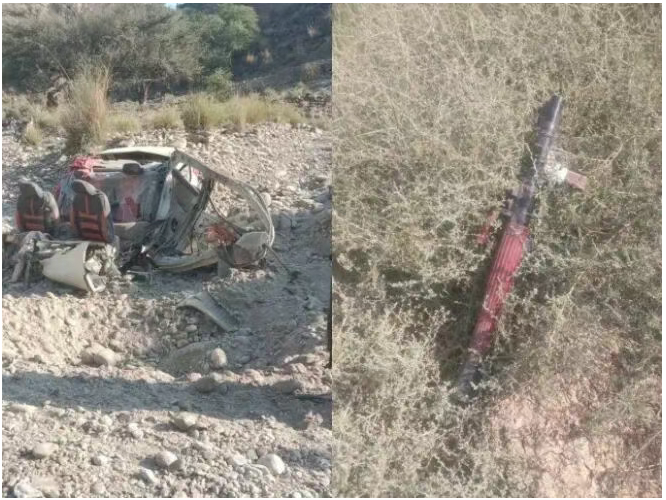
Image of bombed vehicles
(II) Philippines
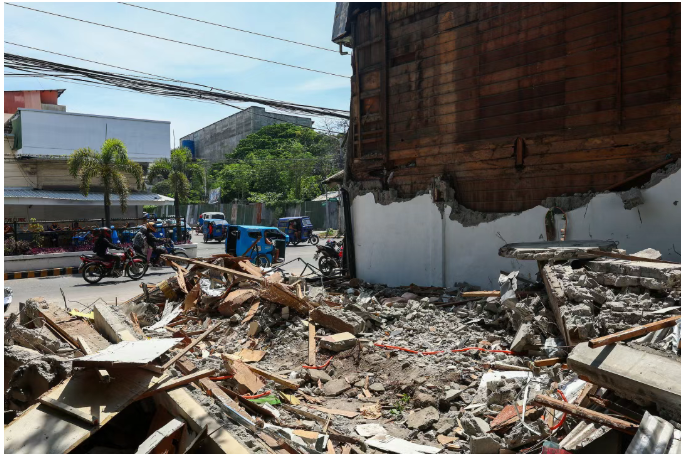
Post-quake scene
(III) Japan
On 19 June, a fire broke out at a primary school in Kita Ward, Tokyo, leaving eight students and two teachers injured. Relevant authorities are investigating the cause of the blaze.
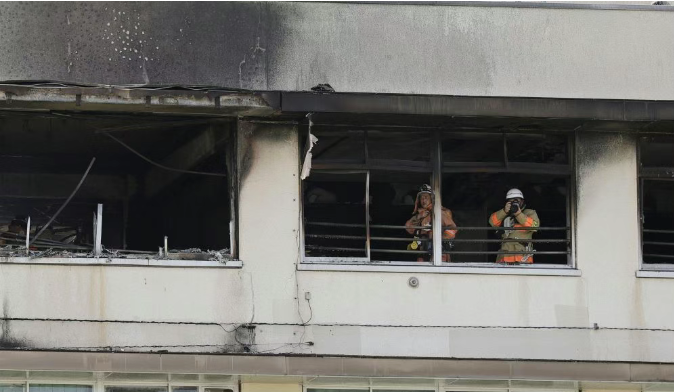
Fire scene
(IV) Republic of Korea
On 16 June, a violent attack occurred near Olympic Park in Songpa-gu, Seoul, injuring two demonstrators. A male suspect attacked the two victims with stones and was subsequently arrested; investigators are probing his motive.
Africa
(I) Nigeria
On 15 June, an improvised explosive device (IED) detonated on the Anka-Bagaga highway in Anka Local Government Area, Zamfara State, killing three police officers.
On 16 June, armed militants laid an ambush in Bokkos Local Government Area, Plateau State, killing one government official.
(II) Democratic Republic of the Congo (DRC)
On 20 June, the DRC Ministry of Health released an epidemic bulletin reporting a cumulative total of 956 confirmed Ebola cases in the current outbreak, including 247 fatalities. The ministry warned the epidemic remains in an upward phase with confirmed infections expected to keep rising.
(III) Sudan
On 15 June, Volker Türk, United Nations High Commissioner for Human Rights, stated that drone airstrikes alone killed over 1,000 Sudanese civilians in the first five months of 2026. UN Secretary-General António Guterres urged the warring parties to cease hostilities, abide by international humanitarian and human rights law, and take all necessary measures to protect civilian populations.
(IV) Niger
On 18 June, armed militants targeted Diori Hamani International Airport in Niamey, Niger’s capital, alongside adjacent military installations. The assault killed 11 soldiers and two civilians and wounded four others. Niger’s Ministry of Defense stated attackers attempted to storm the airport terminal. Security forces counterattacked, eliminating 22 assailants and arresting approximately 20 suspects. Sweep operations are still underway across the affected zone.
Europe & Americas
(I) United States
14 June: A shooting at a supermarket in Senatobia, Mississippi killed one child (media reports released 15 June).
16 June: Gunfire erupted inside a hospital in Delaware, injuring two staff members.
18 June: A shooting incident took place in Times Square, New York City, wounding one person; the suspect was arrested on-site.
Night of 19 June: A shooting spree in Chicago wounded at least 12 people.
20 June: Two people were killed and one injured in a shooting outside a bar in West Haven, Connecticut.
On 15 June, a U.S. Air Force B-52 strategic bomber crashed in the Mojave Desert region of southern California, killing all eight crew members on board. Investigations into the crash cause are ongoing.
(II) Ukraine
The General Staff of the Armed Forces of Ukraine reported intense frontline combat this week. Ukrainian troops repelled multiple Russian ground offensives in Donetsk, Kharkiv, Zaporizhzhia and other axes, recapturing the settlements of Nikiforivka and Maiske northwest of Bakhmut, and downed thousands of Russian drones. Additionally, Ukraine deployed drone swarms to launch coordinated strikes on energy and industrial facilities in Moscow and western Russian border areas. Attacks damaged crude oil processing units and multiple oil storage tanks at a Moscow refinery, as well as assembly workshops of the Tula Instrument Design Bureau.
(III) Russia
15 June: Multiple residential buildings in Tula city, Tula Oblast were hit by Ukrainian drones, killing three civilians and wounding three others.
16 June: A refinery in Moscow sustained facility damage in a Ukrainian drone attack with no human casualties.
17 June: A bus carrying Belarusian youth football players was targeted by a Ukrainian drone in Bryansk Oblast, killing one person and injuring seven (including five children). The bus carried 44 passengers, among them 28 youth footballers.
19 June: Moscow endured a large-scale Ukrainian drone assault with zero reported casualties or property damage.
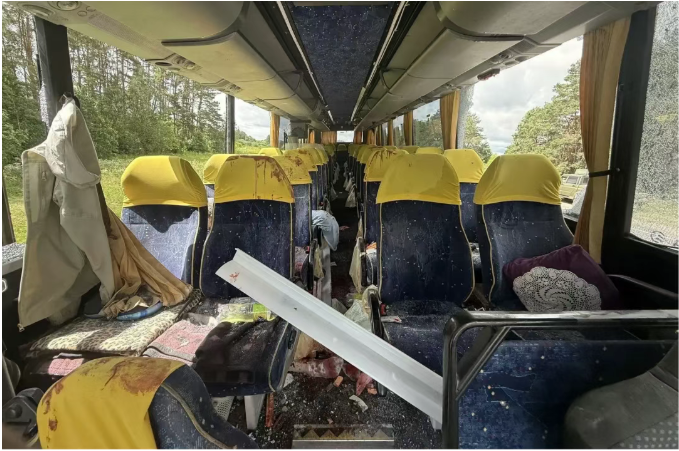
Attacked passenger bus
(IV) Mexico
On 16 June, two separate shooting incidents occurred in Culiacán, Sinaloa State, each claiming one life. Local police have launched investigations.
(V) Ecuador
The decree noted that since early June, nationwide spikes in violence, armed raids and organized crime – including murder, kidnapping for ransom, robbery and drug trafficking – have triggered widespread public panic and disrupted normal economic operations, necessitating emergency security measures.
(VI) Haiti
On 15 June, the United Nations reported that gang-related violence in Haiti has killed at least 2,300 people and injured 1,100 others since the start of 2026, alongside 99 recorded kidnappings. UN human rights bodies urged the Haitian government to establish specialized judicial institutions to crack down on gang criminality.
(VII) United Kingdom
On 19 June, two passenger trains collided near Bedford, UK, leaving one person dead, 33 seriously injured and 56 with minor wounds.
(VIII) Bolivia
On 20 June, Bolivian President Luis Arce announced a nationwide state of emergency. An official statement cited deteriorating economic conditions and worsening fuel shortages that fueled escalating nationwide protests, with demonstrators blocking highways to cut off deliveries of food, fuel and essential supplies.
Maritime Security
(I) Eastern Pacific
On 16 June, U.S. Southern Command issued a statement confirming U.S. forces interdicted a suspected drug smuggling vessel in the Eastern Pacific, killing one person on board with no U.S. military casualties.
On 18 June, U.S. forces conducted a second raid on another suspected drug boat in the region, leaving three people dead.
(II) Yemen
On 15 June, the United Kingdom Maritime Trade Operations (UKMTO) issued a security advisory stating a small craft approached a container ship 14 nautical miles south of Yemen’s coastline and opened fire on the vessel. No damage details have been released to date.
(III) English Channel
On 16 June, a Russian frigate discharged warning shots at a UK-flagged yacht navigating the English Channel. Russia’s Ministry of Defense stated the vessel’s crew attempted radio communications and signal flares to divert the yacht after observing it approaching on a dangerous trajectory, but the craft continued closing in until the distance narrowed to 150 meters. Warning shots were then fired, prompting the yacht to alter course. No injuries or vessel damage were reported.