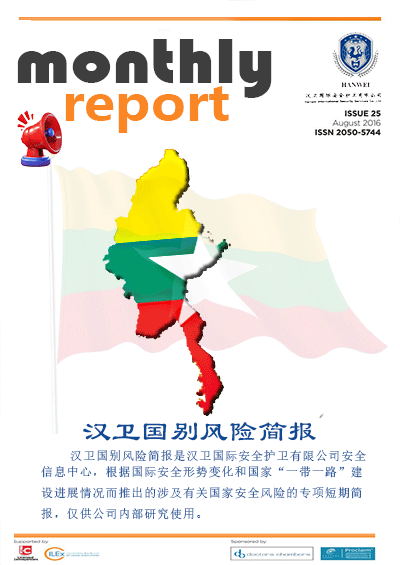
Myanmar Monthly Risk Report‑August
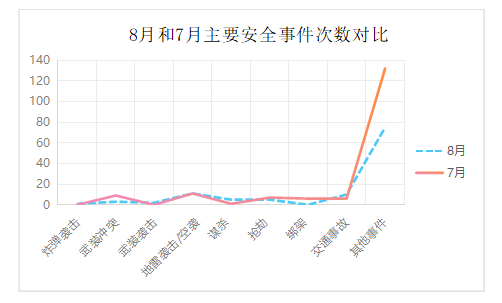
According to security‑related public‑opinion reports provided by Hanwei International, a total of 112 representative security incidents of various types inside Myanmar were recorded in August, 60 fewer than in July. These incidents caused 93 fatalities and 440 injuries. Among the categorized security cases, natural disasters and drug‑related offences were predominant. Such security incidents were concentrated mainly in Shan State, Mandalay and other localities.
Hanwei International Analysis
Frequent Overseas Visits in Pursuit of International Recognition. From early to mid‑August, Myanmar’s leader Min Aung Hlaing conducted high‑frequency peripheral diplomatic activities. Following his visits to India in late May, China in June and Laos in July, he travelled to Thailand in August and was received by Thailand’s national leaders at an official level. Thailand defined this engagement as a “calibrated re‑engagement” and supported Myanmar’s gradual return to ASEAN. On 3 August, Aung San Suu Kyi met representatives of the International Committee of the Red Cross (ICRC) in Naypyidaw. This marked her first public meeting with foreign officials since her detention in 2021, which external observers regarded as a “political facelift” by the Min Aung Hlaing‑led administration to improve its international image and expand diplomatic room for manoeuvre. From 17 to 18 August, Min Aung Hlaing paid a visit to Russia. The two sides stepped up progress on the Dawei Special Economic Zone and the development of a small‑scale nuclear power plant, signed 12 memoranda of understanding, and secured access to a critical satellite‑navigation system to enhance military positioning and anti‑jamming defence capabilities. On 26 August, Vietnamese Foreign Minister Bui Thanh Son visited Naypyidaw and met Min Aung Hlaing, formally extending an invitation for Min Aung Hlaing to make a “friendly visit” to Vietnam. This was the first visit to Myanmar by Vietnam’s Foreign Minister since the 2021 coup, signalling further expansion of Myanmar’s diplomatic space.
Civilian‑Faced Nominal Administration with De Facto Military‑Civic Integrated Governance. Effective 1 August, Myanmar’s National Defence and Security Council announced the lifting of the national state of emergency and formed a new Union Government. U Nyunt Sothe was appointed Union Prime Minister. Min Aung Hlaing, Commander‑in‑Chief of the Defence Services, stepped down from the post of Prime Minister and assumed the chairmanship of the National Security and Peace Commission. This formally terminated the repeatedly‑extended national state of emergency. The move is interpreted as pre‑election positioning ahead of the year‑end general election to complete the identity transition from “military‑run administration” to “elected civilian‑led governance”. After Aung San Suu Kyi’s rare meetings with ICRC delegates on 3 and 7 August, the United States and the Philippines, in its capacity as the rotating ASEAN Chair, issued a joint statement on 7 August demanding the unconditional release of Aung San Suu Kyi and all political prisoners. On 9 August, Myanmar’s Ministry of Foreign Affairs released a statement criticizing ASEAN’s demand for her unconditional release. The statement stressed that Myanmar had already commuted part of Aung San Suu Kyi’s sentence on humanitarian grounds; whether she could obtain full and unconditional release would ultimately “follow legal procedures”. By implication, Myanmar would independently decide her release in accordance with domestic law and would not yield to pressure from the United States and ASEAN. Furthermore, the Myanmar authorities maintained that the incumbent Government was formed through an election reflecting the genuine will of the Myanmar people and held legitimate state‑governance authority. Throughout August, the Min Aung Hlaing administration continued to pursue “balanced diplomacy” alongside domestic appeasement measures. Even though the military‑backed Union Solidarity and Development Party (USDP) won earlier this year and controls parliament, opposition forces and ethnic armed organizations refuse to recognize the election outcome, leaving the political deadlock firmly in place.
Sharp Currency Depreciation and Severe Inflation. From early to mid‑August, the Myanmar kyat underwent violent exchange‑rate fluctuations. On the black market, the rate once plummeted from 5,000 kyats per US dollar at the beginning of the month to a historic low of 7,500 kyats. Although it later rebounded to roughly 6,000 kyats per US dollar, commodity prices failed to fall back. In August, fuelled by currency depreciation, rising transport costs and disrupted cross‑border trade, prices of medicines and general groceries soared in major cities including Yangon. Residents in Naypyidaw reported that weekly household spending on food and groceries jumped from approximately 25,000 kyats to 40,000 kyats. To stabilize the exchange rate, the military‑led government adopted tough enforcement measures; at least 56 gold dealers and foreign‑currency traders have been arrested since June. Nevertheless, analysts argue that prevailing economic policies have triggered a serious livelihood crisis, with the poverty rate hitting a six‑year high. Currency depreciation has driven steep increases in import and transportation costs, sending prices of basic daily necessities sharply upward. As wages have not risen correspondingly, public purchasing power has been severely eroded. Numerous households have had to cut back on food expenditure, and extreme cases have emerged whereby “a full‑day’s labour cannot earn enough to buy a sack of rice”.
Traditional Festivities and People‑to‑People Exchanges. On 9 August, the Chinese Film Exhibition themed “Glowing Reels, Youthful Dialogues”, co‑hosted by the Chinese Embassy in Myanmar and other institutions, opened at the Yangon National Theatre. Myanmar’s Deputy Minister of Information together with diplomatic envoys from multiple countries attended the event. Attendees watched the documentary Blue Planet Beyond the Window and visited an intangible‑cultural‑heritage photo exhibition. This event served as an important vehicle for bilateral people‑to‑people‑and‑cultural exchanges. On 28 August, coinciding with the Full‑Moon Day of Myanmar’s Waso month, the Myanmar Chinese General Chamber of Commerce held its 7th Robe‑Offering Prayer Ceremony. Senior Buddhist monks chanted scriptures, and ethnic‑Chinese businesspeople presented monastic robes and charitable donations to the clergy. The event illustrated the local Chinese‑community tradition of respecting indigenous Buddhist culture and integrating into local society. During August, President Min Aung Hlaing publicly highlighted that the national literacy rate had risen to 92.1 %. He urged all citizens to cultivate reading habits and foster a lifelong‑learning society as a driving force for national human‑resource development.
Multi‑Front Combat and Profound Crisis. Between 12 and 18 August, the Myanmar Armed Forces fought concurrently against several ethnic armed organizations. In Ayeyarwady Region in the southwest, nearly one thousand troops supported by military aircraft launched assaults on Arakan Army (AA) positions but retreated all along the line following counter‑attacks. Fierce firefights broke out between the Myanmar military and the Kachin Independence Army (KIA), Karen National Army and People’s Defence Force in Kachin State, Kayin State and Magway Region, with seesaw battles unfolding across multiple locations. From 12 to 17 August, Myanmar authorities conducted operations against online‑fraud and internet‑gambling syndicates in Myawaddy, Kayin State. Eight illegal buildings were demolished and 777 suspects arrested. During this period, security forces engaged local armed groups in seven separate skirmishes. After failing to achieve expected results from its offensive against the Yekyi and Laymyinna battlefields on 14 August, the military launched another attack on AA positions from the direction of Dapaing Township, triggering heavy clashes. Casualty figures and the outcome remain unconfirmed, as both sides are locked in a war of attrition. At five locations within Yekyi and Dapaing Township, the AA seized multiple bodies of government soldiers together with ammunition. The humanitarian crisis deepened further in August. Due to military blockades and armed conflict in Rakhine State and other areas, civilians were forced to survive by harvesting wild bamboo shoots for food. United Nations reports indicated that August‑September constitutes a peak period for civilian casualties; more than 3.7 million people are internally displaced nationwide, and over 19.9 million persons face food insecurity. From 25 to 28 August, a military transport flotilla consisting of 15 vessels sailed northwards up the Ayeyarwady River toward Kachin State. The convoy came under drone strikes carried out by resistance forces. Fighting escalated further along the river, resulting in civilian casualties in multiple riverside localities.
Rising Risks for Chinese‑Funded Enterprises in Myanmar. From early to mid‑August, under the impact of the blockade launched by Myanmar’s military‑led government in northern Shan State under its “Hundred‑Day Plan” (scheduled to run through mid‑August), large numbers of Chinese‑owned vehicles and cargo were seized indiscriminately. Logistics parks and wholesale markets in Lashio, Muse and surrounding areas were largely brought to a standstill. Cross‑border freight transport along the China‑Myanmar border almost ground to a halt; most freight forwarding firms suspended shipments of ordinary civilian‑bound goods destined for Lashio and Mandalay. On 16 August, Myanmar’s Investment Commission (MIC) approved 14 new investment projects, including SKD (semi‑knocked‑down) assembly of cargo trucks, electric two‑wheelers and three‑wheelers, plus assembly work for various other motor vehicles. This demonstrates that amid the difficult security context, Chinese investment in Myanmar is shifting from opportunistic speculative investment toward selective resumption. Manufacturing and assembly have become active sectors absorbing new foreign direct investment. In the latter half of August, notwithstanding daunting security and business‑environment challenges, key projects operated by several large Chinese‑funded enterprises forged ahead amid difficulties. For instance, the client‑side team for the onshore processing facility and associated onshore‑pipeline project of China Electric Power (Myanmar) ASK travelled to Chengdu for business consultations with the Chinese execution team. The two sides held in‑depth discussions on critical milestones including review of project design models to ensure safe and on‑time project delivery.
Recommendations from Hanwei International
In early August, Myanmar security forces carried out a special crackdown on online fraud and gambling in Tachileik Township, eastern Shan State, arresting 41 illegally‑crossed Chinese nationals. In late August, a 29‑year‑old female Chinese national was lured and abducted in Thailand. The suspects had planned to transport her to border areas adjacent to Myanmar or sell her to online‑fraud compounds. The woman escaped by jumping out of the moving vehicle and was rescued, and four male suspects were apprehended.
Hanwei International’s Recommendations:
Do not trust fraudulent recruitment information circulating online promising “high‑pay jobs overseas”, “free outbound travel”, “financial investment opportunities” or “commission rebates for click farming”. Steer clear of traps involving telecom fraud and internet gambling. Refrain from any participation in illegal activities such as prostitution, gambling and narcotics‑related offences.
Avoid non‑essential outings. Stay away from crowded venues, high‑crime zones and remote isolated locations.
Maintain a low‑profile daily lifestyle. Exercise caution when making new acquaintances. Do not flaunt or display wealth. Avoid carrying or storing large sums of cash and refrain from exposing valuables in public spaces.
If travel is unavoidable, go out in groups whenever possible; avoid travelling alone or late at night. Do not accept rides from strangers. Keep vehicle doors locked when self‑driving. Carry identification documents such as your passport on your person.
Myanmar Police Hotline: 0095‑199
Myanmar Medical Emergency Hotline: 0095‑192
Consular Protection & Assistance, Chinese Consulate‑General in Mandalay: 0095‑9‑259172726
Consular Protection & Assistance, Chinese Embassy in Myanmar: 0095‑9‑43209657
24‑Hour Global Consular Protection and Service Hotline of China’s MFA: 0086‑10‑12308 or 0086‑10‑65612308
Chart 1: Classification of Security Incidents in August
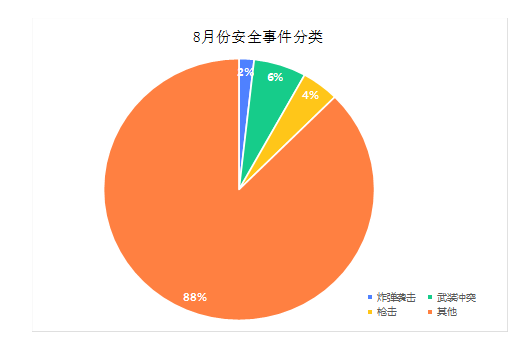
Chart 2: Classification Statistics of Fatalities and Injuries in August
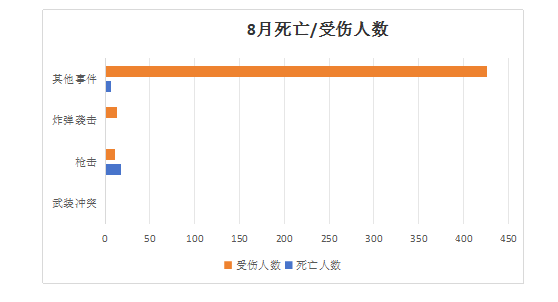
Chart 3: Statistics on Security Incidents by Major States/Regions in August
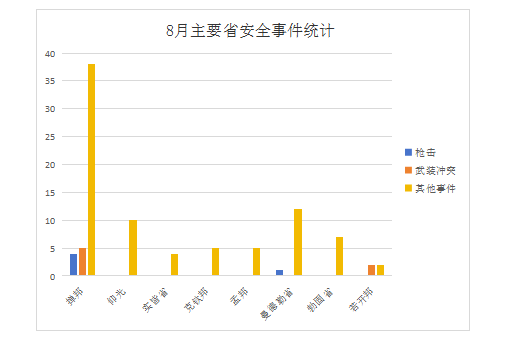
Chart 4: Comparison of Major Security Incident Counts‑ August vs July