Myanmar February Monthly Risk Report
According to security public opinion monitoring reports from Hanwei International, a total of 127 representative security incidents of various types were recorded in Myanmar in February, an increase of 49 cases from January. These incidents caused 36 deaths and 78 injuries. Classified by security type, the incidents were dominated by armed conflicts and bomb attacks, mainly concentrated in Shan State, Yangon and other regions.
In February 2026, Myanmar’s situation showed distinct dual characteristics: Politically, the military sought a transition to a civilian government through general elections, yet faced widespread international isolation and non-recognition. Economically, the authorities actively attracted investment and advanced China-Myanmar cooperation. On the battlefield, armed conflicts remained frequent amid a deepening humanitarian crisis.
Post-Election Political Developments
On February 4, provincial government officials led by Sagaing Region Chief Minister U Mya Kyaw made preparations for the upcoming third parliamentary session. On February 5, officials headed by Ayeyarwady Region Chief Minister U Tin Maung Win inspected the regional parliament building to prepare for the third parliamentary session. On February 6, a preparatory working meeting for the third parliament was held in Mawlamyine, the capital of Mon State. On the same day, Rakhine State Chief Minister U Than Lin held a meeting with all state government officials to arrange preparations for the third parliamentary session, including renovations to parliament buildings and the reopening of meeting rooms and offices.
On February 8, the Union Election Commission (UEC) issued Announcement No. (33/2026), releasing the list of 56 military-appointed Amyotha Hluttaw (House of Nationalities) members, including:
1 Major General, 6 Brigadier Generals, 16 Colonels, 5 Lieutenant Colonels, 21 Majors, 7 Captains.
Previously on February 7, the UEC released the list of 110 military-appointed Pyithu Hluttaw (House of Representatives) members, including:
1 Major General, 10 Brigadier Generals, 18 Colonels, 42 Lieutenant Colonels, 27 Majors, 12 Captains (including 6 female officers).
The core political agenda in February was the military’s push to establish a new administration based on election results. The military-aligned Union Solidarity and Development Party (USDP) secured an overwhelming victory in the general election. Senior Myanmar officials announced at an event on February 14 that a new government led by an elected president is expected to be formed via parliamentary procedures in early April.
International Cooperation Advancement
On February 22, Russia’s Deputy Minister of Defence, while visiting Naypyidaw, signed a military cooperation agreement with Myanmar’s Minister of Defence Major General Aung Myo Than. The Russian delegation also held talks with Union Minister General Maung Maung Aye to discuss bilateral military cooperation. Separately, Russia’s Deputy Minister of Energy met with Myanmar’s Union Minister of Electric Power U Nyan Tun in Naypyidaw on February 2 to negotiate energy cooperation including power projects.
On February 4, Russia and Myanmar signed a five-year military cooperation agreement, demonstrating Russia’s full support for Myanmar’s national leadership in safeguarding national sovereignty, territorial integrity and strengthening national defence capabilities.
On February 18, Thai Foreign Minister Sihasak Phuangketkeow held talks with Myanmar’s Foreign Minister U Than Swe. The Thai side stated that Myanmar had held national democratic elections five years after the military took power, and Thailand hoped post-election Myanmar could re-engage with ASEAN. The two sides focused on deepening economic and trade investment, combating transnational crimes including cyber fraud, and protecting the rights and interests of Myanmar workers overseas.
On February 24, Yunnan-Myanmar economic, trade and resource cooperation was further deepened. Myanmar Minister of Mines Khin Maung Yi visited Yunnan, and the two sides signed a memorandum of understanding to jointly host Myanmar jade and gemstone public auctions in Jiegao, Ruili, expanding cooperation in the jade industry.
On February 26, Myanmar and Russia strengthened aerospace cooperation. A delegation from Roscosmos State Corporation visited Myanmar, with discussions focusing on satellite launches, human resource development, and enhanced collaboration in the peaceful use of outer space.
Implementation of International Investment Agreements
To better implement the ASEAN Comprehensive Investment Agreement (ACIA) and the Regional Comprehensive Economic Partnership (RCEP), Myanmar’s Ministry of Investment and Foreign Economic Relations launched a one-month capacity-building program in February to improve officials’ professional capabilities in formulating investment negative lists under the agreements.
On February 25, Myanmar’s Investment Commission approved 17 new projects across sectors including electric vehicle assembly, hotel and tourism, oil and gas, and agriculture, expected to create over 2,400 jobs.
On February 26, a large textile project was approved in Yangon. The Yangon Region Investment Commission greenlit a 100% foreign-funded industrial project producing polyester fiber and synthetic fabrics for the garment industry, with a total investment exceeding 3 million US dollars and an estimated 911 local jobs.
In late February, Myanmar’s Central Bank continued massive foreign exchange injections. To stabilize the kyat exchange rate and secure imports of daily necessities such as edible oil and fuel, the central bank continuously injected US dollars, Thai baht and Chinese yuan into the market.
Livelihood Improvement Measures
The official exchange rate has become virtually ineffective, with the real market exchange rate around 1:550 in February, reflecting a sharp devaluation of the Myanmar kyat. Over the past decade, average commodity prices have surged about 5 times, while salaries have only doubled. In Bagan, daily wages for restaurant service staff are merely 5,000 Myanmar kyat (less than 10 RMB). In Yangon, ordinary residents earn only 200–300 RMB per month. A bottle of mineral water costs 800–1,000 kyat, meaning a full day’s wages can barely buy 5 bottles of water for an average worker.
At a meeting in Homalin Town in mid-February, the government explicitly ordered action against price gouging to curb the impact of soaring living costs on the public.
According to reports on February 23, the government plans to revise the century-old passport law to regulate unlicensed intermediaries, bringing prospects of standardized legal overseas employment for citizens in the future.
The Ministry of Health held a meeting on February 23, planning measures within the next five years to reduce citizens’ out-of-pocket medical expenses. Though long-term solutions cannot resolve immediate hardships, the move indicates official attention to public medical burdens.
Escalating Armed Conflicts
On February 8, military forces fully recaptured and regained control of Banmaw Town in Sagaing Region, which had been temporarily occupied by the Kachin Independence Army (KIA) and People’s Defence Force (PDF). A total of 69 major and minor battles took place during the recapture operation, causing casualties among security forces. Troops also seized weapons, ammunition, artillery shells, explosive devices and recovered militant remains.
On February 18, Myaungtaw General Hospital in Rakhine State was severely damaged in a military airstrike. The hospital was operating at full capacity at the time, leaving at least 30 dead and over 70 injured.
From February 23 to 25, fierce fighting erupted between the military junta forces and the Arakan Army (AA) around Sittwe and the border with Bonna Township in Rakhine State. Both sides deployed heavy artillery, RPG rocket launchers and snipers. Local sources stated the AA also used speedboats to fire at military naval bases.
On February 24–25, airstrikes launched by Myanmar’s military across Rakhine State and Sagaing Region caused heavy civilian casualties. An airstrike hit a local market in Yoengu Village, Bonna Township, Rakhine State, killing at least 17 civilians including women and children and destroying multiple buildings. In Minmu Township, Sagaing Region, military powered paragliders targeted locations where villagers used Starlink devices, leaving 9 civilians dead.
In February, Chinese diplomatic missions in Myanmar issued clear security alerts warning of extremely high risks in Lashio and other areas of Shan State, advising Chinese nationals to complete registration and arrange immediate relocation or evacuation back to China. The local armed group DKBA in Phaya Thonezu Town ordered Chinese personnel engaged in designated industries to leave before February 28 and banned new arrivals from entering the area.
Hanwei International Safety Recommendations
Strictly abide by curfew orders: Strict night-time restrictions are enforced in multiple regions (e.g., males caught outdoors after 7 p.m. in Bagan may face immediate conscription). Curfew hours in Yangon and other areas change frequently; remain indoors after dark.
Stock up daily necessities: Prepare at least one week’s supply of drinking water, food and lighting equipment. Local prices are skyrocketing; banking services, power and communication may be interrupted at any time.
Avoid outdoor gatherings: Stay away from sensitive locations including government institutions, military camps, checkpoints and bars. Attacks targeted even funerals and local markets in February.
Maintain a low profile: Refrain from posting sensitive remarks on social media platforms.
Emergency Contact Numbers
Myanmar Police: 0095-199
Myanmar Ambulance: 0095-192
Chinese Consulate in Mandarin Consular Protection Hotline: 0095-9-259172726
Chinese Embassy in Myanmar Consular Protection Hotline: 0095-9-43209657
China Global 24/7 Consular Protection Hotline: 0086-10-12308 / 0086-10-65612308
Chart 1: Classification of Security Incidents in February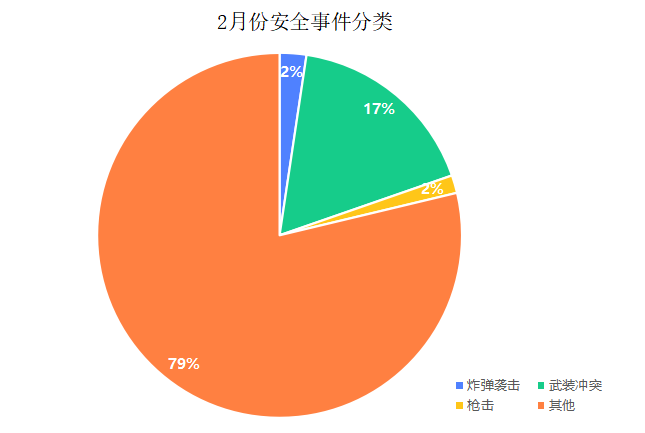
Chart 2: Statistical Breakdown of Deaths and Injuries in February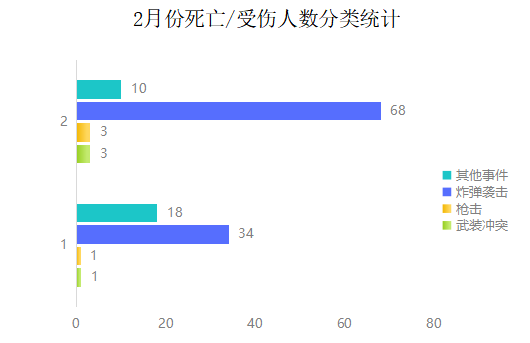
Chart 3: Security Incident Statistics by Major Region in February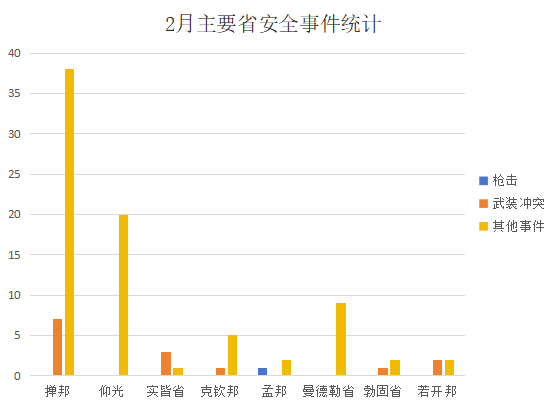
Chart 4: Comparison of Major Security Incident Frequencies – February vs January