Analysis of Nigeria’s Social Security Situation – February 2026
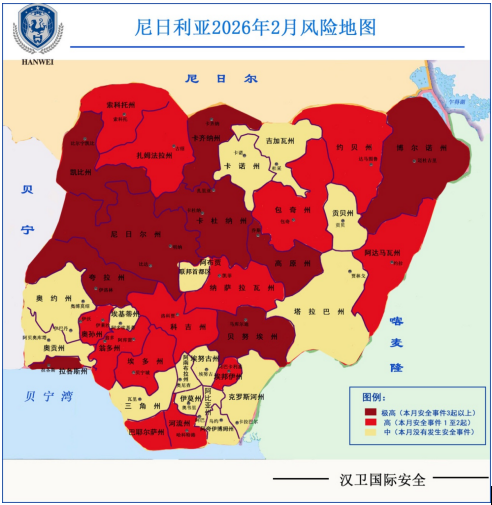
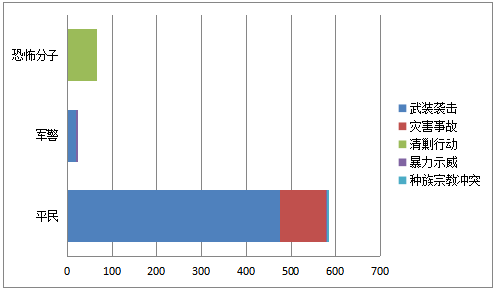
Based on monitoring reports from Hanwei International’s West Africa Security Officer and comprehensive media coverage, 66 security incidents were recorded across Nigeria in February 2026. These incidents resulted in 585 civilian deaths, 21 security force deaths, and at least 101 abductions. Incident types mainly included armed attacks and kidnappings, military clearance operations, and public safety accidents.
I. Comprehensive Analysis of Security Incidents
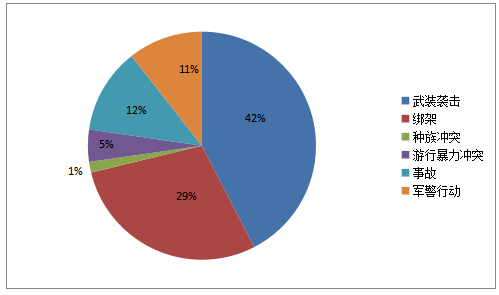
28 armed attacks (42%)
19 armed kidnappings (28%)
1 ethnic conflict (1.5%)
8 public safety incidents (12%)
7 military clearance operations (10%)
3 protests and demonstrations (4.5%)
(1) Extremely High Risk in Central, Mid‑western and Northeastern Nigeria
On February 13, a threatening letter signed by the “Nigerian Terrorist Army (NTA)” was found in Owode Local Government Area, Kwara State, threatening killings, abductions, and destruction. Schools closed, businesses shut down, and police went on red alert.
On February 19, a community in Kebbi State received a letter suspected to be from Boko Haram, threatening attacks unless a ransom of approximately 100 million naira was paid to community leaders. Many families fled their homes.
(Figure 1: Distribution of Security Incidents – February 2026)
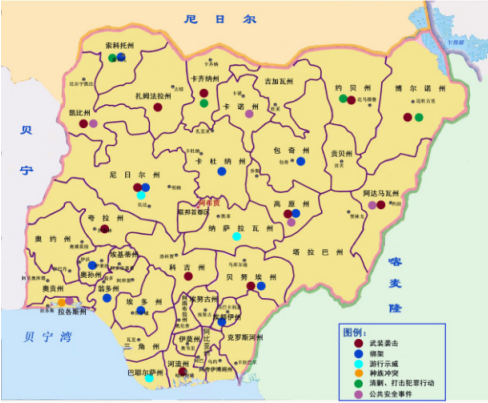
(Chart 1: Statistics of Security Incidents by Major Region – February 2026)
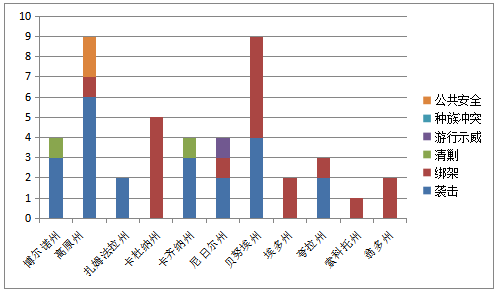
(2) Armed Attacks Cause Massive Casualties
Large‑scale deadly attacks increased significantly.
There were 16 major attacks causing 10+ casualties.
Feb 3: 162 killed in Kwara State (single deadliest attack in recent times)
Feb 3: 23 civilians killed in Katsina State
Feb 14: 56 civilians killed in Niger State
Feb 18: 34 killed in coordinated attacks in Kebbi State by suspected “Lakurawa” militants
Feb 19: 50 killed in Zamfara State
Feb 24–25: 25 killed in Adamawa State
Cross‑border foreign militants worsened insecurity.
On February 23, the Nigerian Federal Government revealed that most terrorists carrying out deadly attacks in forest and farming communities in Borno, Yobe, Sokoto, Niger, and Kwara States were foreign nationals exploiting weak border controls. Many arrested suspects spoke fluent French but not English or Hausa, pointing to involvement from Niger, Mali, Burkina Faso, Cameroon, and DRC. Nigeria is strengthening cooperation with neighboring countries to curb the threat.
(3) U.S. Troops Deployed to Nigeria
U.S. AFRICOM stated the deployment was part of long‑term security cooperation to enhance training, intelligence sharing, and operational coordination against Boko Haram and ISWAP. Nigeria’s Defense Headquarters confirmed the troops would focus on training, technical support, and capacity building, not direct combat. Media analysis noted the deployment may boost military capabilities but raises questions over sovereignty and foreign military basing.
(4) Public Safety Incidents Cause Heavy Losses
Feb 8: 30 killed in a road accident in Kano State
Feb 13: 14 drowned in a boat accident in Kebbi State
Feb 18: 37 killed in a toxic gas leak at a mine in Plateau State
280 new suspected cases
1,034 total suspected cases
240 confirmed cases
51 deaths (CFR 21.3%, higher than 19.4% in 2025)
Hotspots included Ondo, Edo, Taraba, Bauchi, Plateau, and Benue States. In Benue, 250 suspected cases, 45 confirmed, and 10 deaths were recorded, with 12 medical staff infected (5 doctors, 4 nurses, 2 community health workers, 1 porter).
(5) intensified Military Clearance Operations
Feb 4: Operation Desert Sweep V destroyed 3 extremist camps in the Timbuktu Triangle, killing 32 militants and freeing 70+ civilians.
Feb 7: Army recaptured 529 stolen livestock in Katsina State.
Feb 22: Operation Hadin Kai repelled multiple ISWAP attacks in Yobe and Borno States, killing 25 militants and seizing weapons and equipment.
(Chart 2: Breakdown of Security Incidents – February 2026)
(Chart 3: Fatalities by Category – February 2026)
(Chart 4: Comparison of Major Security Incidents – February vs. January 2026)

II. Risk Warnings and Prevention Recommendations
Chart 5 Nigeria Social Security Risk Early Warning
| Risk Level | Score Range | Tier | Regions/Cities | Hazard Sources |
|---|---|---|---|---|
| Extremely High Risk (Level 1) | 17–25 | I | Borno, Zamfara, etc. (NE/NW) | Boko Haram attacks, ethnic violence, military operations |
| II | Kaduna & middle belt; oil‑producing south | Ethnic conflict, Niger Delta militancy, kidnapping | ||
| III | Offshore Rivers State (Gulf of Guinea) | Piracy, armed kidnapping, theft | ||
| High Risk (Level 2) | 10–16 | I | Ogun, Oyo, Osun, Anambra | Hijacking, sporadic terror attacks |
| II | Abuja, Lagos | Protests, kidnapping, theft | ||
| III | ||||
| Medium Risk (Level 3) | 5–9 | I | ||
| II | ||||
| Low Risk (Level 4) | 1–4 | I | ||
| II |
Recommended Security Measures
- Full‑time security for all travelRemote rural areas lack police presence and have poor infrastructure. Chinese enterprises should obtain real‑time intelligence, conduct route risk assessments, and deploy security escorts.
- Heightened vigilance during RamadanNigeria entered Ramadan on February 18. Historical patterns show increased terror risks during this period.
Feb 18: A traditional ruler killed in Ondo State
Feb 19: 34 Muslim worshippers killed in Kebbi State
Effective risk avoidance
Most attacks occur in the northeast and north‑central regions, especially around Maiduguri, border areas with Niger, and Zamfara State. Kaduna and Abuja are volatile.