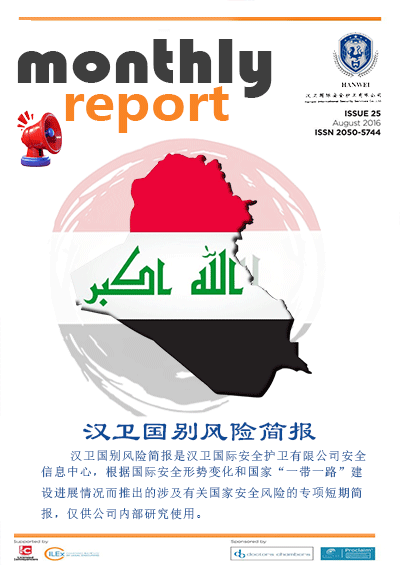
Iraq Security Situation Review – January 2026
Researcher No. 006
Political and Economic Dimensions: Persistent disputes over the prime ministerial nomination; a caretaker government constrained by the constitution, leading to decision‑making gridlock and governance vacuum; market volatility triggered by tariff policy adjustments and a widening fiscal deficit; and widespread, escalating protests across multiple sectors.
U.S. Intervention: The spillover of U.S.-Iran tensions into Iraq, with domestic armed groups voicing solidarity with Iran; and the U.S. continuing to transfer ISIS detainees to Iraq, sparking sovereignty disputes and internal security concerns.
Social Security: Frequent shootings across multiple governorates, plunging several regions into turmoil and undermining regional security.
I. Political and Economic Dimensions
(1) Controversy Over New Prime Ministerial Nomination; Limited Authority of the Caretaker Government
Domestic: Shiite factions, which suppressed dissent to maintain bloc unity, exhibited “superficial unity with internal divisions.” Some Sunni political forces held complex, ambivalent positions.
International: Iran adopted a “conditional support” stance to consolidate its proxy influence, while the U.S. threatened sanctions to prevent excessive infiltration by Iran‑affiliated armed groups into the new government.
(2) Tariff Policy Changes Trigger Volatility; Fiscal Deficit Widens
(3) Mass Protests Erupt Over Livelihoods; Kurds Express Cross‑Border Solidarity
Mass Protests:
Healthcare: Medical staff at multiple hospitals in Basra Governorate staged repeated sit‑ins demanding the immediate hiring of 2024 medical school graduates.
Livelihood Support: Persons with disabilities and their families in Sulaymaniyah Governorate rallied to demand winter fuel subsidies; over 17,000 disabled residents in the province reportedly lack such subsidies amid harsh winter conditions.
Education: Faculty at Qasim University in Babylon Governorate launched an indefinite sit‑in after the Prime Minister’s Office decided to cut certain university stipends, paralyzing campus operations. Protests have spread to universities in Babylon, Baghdad, and other governorates, with potential for larger‑scale demonstrations in Baghdad.
Cross‑Border Solidarity: On January 20, Kurds across Iraq held rallies in solidarity with Syrian Kurds. In Erbil, hundreds of Kurds and activists staged three protests—at the UN office, U.S. Consulate, and city center—calling for international intervention in clashes between Syrian government forces and the Syrian Democratic Forces, which have killed ~10 civilians and triggered new displacement. Protests also occurred in Diyala and Kirkuk Governorates, condemning attacks on Kurdish civilians by Syrian armed forces.
II. U.S. Intervention Dimensions
(1) Escalating U.S.-Iran Rivalry; Iraq Rejects Becoming a “Frontline”
(2) Transfer of ISIS Detainees to Iraq Exacerbates Domestic Controversy
III. Social Security Dimensions – Shooting Incidents
Maysan Governorate: Early January saw multiple assassinations and heightened tensions. A security official in his 50s was fatally shot in Kahlaa District in a clan‑related attack. An assassination attempt on a leader of the Peace Brigades in Amara was followed by the group burning the Provincial Council Chairman’s office and firing into the air; no direct clashes with the Ahrar al‑Haq Brigades occurred. Security forces swiftly imposed a curfew and blocked major roads to prevent escalation.
Dhi Qar Governorate: A taxi driver in Nasiriyah was shot dead and his vehicle stolen by unknown assailants posing as passengers; the perpetrators remain at large.
Basra Governorate: A 30‑year‑old man carrying flowers was shot dead (four times) in central Basra.
Baghdad Governorate: In Baghdad’s Karrada District, gunmen shot and killed a civilian riding a tricycle near the Ghazala Restaurant.
Security Recommendations for Chinese Enterprises and Individuals in Iraq
For Enterprises
Uphold Neutrality to Mitigate Political Risks: Maintain strict neutrality; avoid exclusive, private partnerships with specific factions or individuals. Refrain from involvement in political processes—including the prime ministerial nomination, presidential elections, and cabinet formation—and distance from factional strife. Upgrade security at project camps and offices, deploy professional security personnel, and strengthen on‑site security systems.
Monitor Policy Changes to Ensure Operational Stability: Closely track adjustments to investment and tariff policies, assess potential impacts on operations, and ensure compliance to avoid risks such as asset seizures or project suspensions due to policy shifts.
For Individuals
Minimize Non‑Essential Travel; Avoid High‑Risk Zones: Avoid areas near parliament, political/armed faction strongholds, protest hotspots, and U.S./Iran‑related facilities. Limit travel, especially at night or during peak crowds. Carry valid ID and avoid large cash or valuables.
Heed Official Alerts; Maintain Communication: Monitor security advisories from the Chinese Embassy and Consulates in Iraq, stay updated on social dynamics and risk warnings, and save emergency contacts—including consular protection hotlines, local police, and reputable medical facilities. In the event of factional/clan/family conflicts, civil unrest, or extremist attacks, immediately seek shelter, contact local police, and alert the embassy/consulate for assistance, cooperating with on‑site response efforts.